In Japan, the line on raw food is drawn by what the law bans and what the authorities advise.
Order the children's and grandparents' portions cooked
In Japanese restaurants, basashi (raw horse meat), sashimi and the raw egg in tamago kake gohan (raw egg on rice) are served as a matter of course. What the law bans from being served raw at all is beef liver and pork meat and offal (raw beef may be served only if it meets the national standard). Basashi and raw egg are not banned, but the national and prefectural governments advise children and older people to avoid raw meat, and advise infants aged 2 and under, older people and others to avoid raw egg.
*This article contains no affiliate links. It is compiled neutrally from public sources and official information.
The 3 linesThere are 3 lines: what the law bans, what shops must display, and what the authorities advise
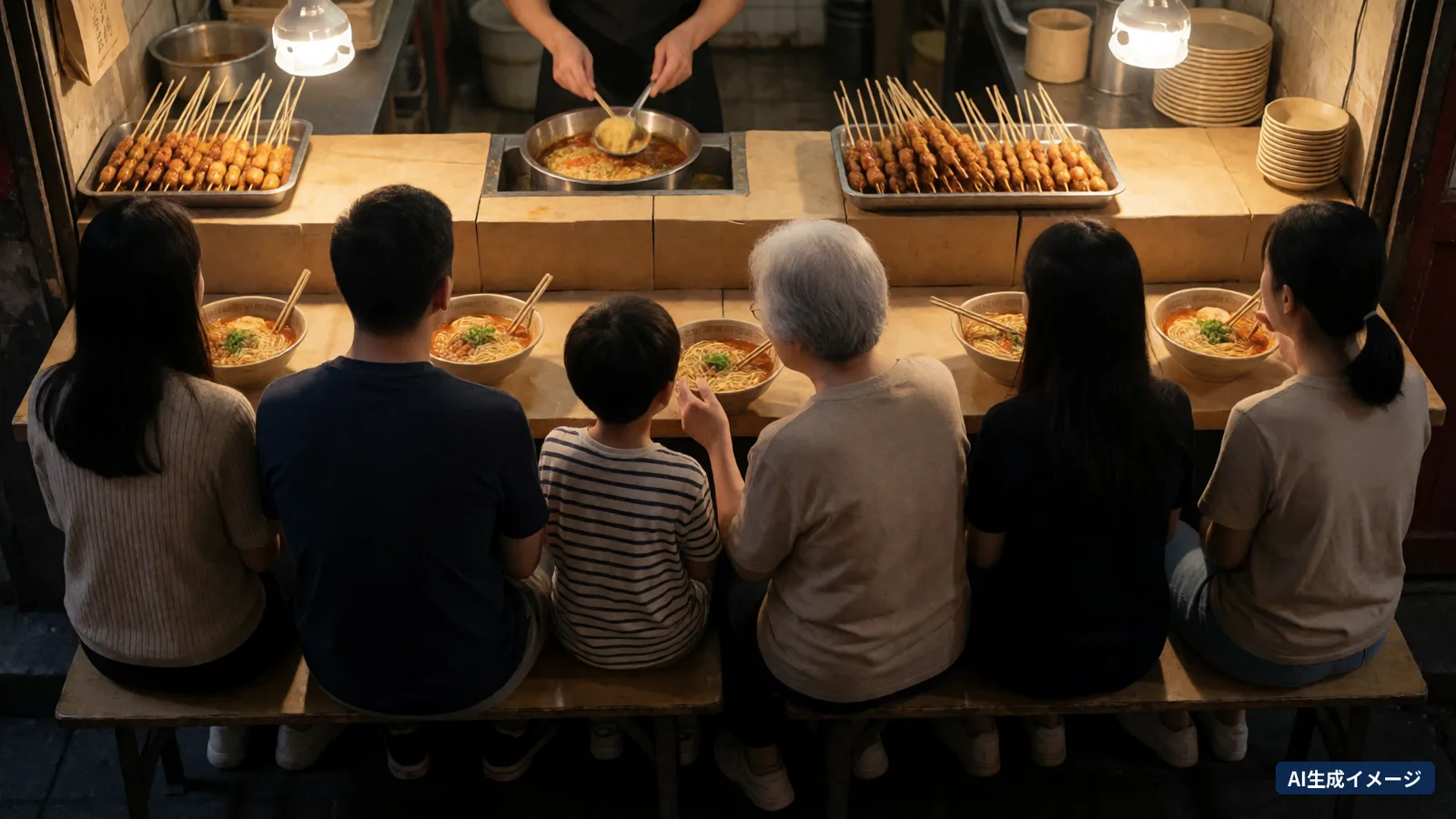
Walk into an izakaya in Kumamoto as a family of 6 and you will wonder whether to order the local speciality, basashi. The adults may want it, but it is hard to tell whether you can pass the same plate to the children and grandparents. This article separates what the law bans, what shops must display a warning about, and what the national and prefectural governments advise against, and draws the line on what to do at a table of 6.
In short: in Japan, "can you eat it raw?" falls into these 3. What matters for children and grandparents is almost always the third, the advice.
| Food | The law | Notice the shop must display | Official advice |
|---|---|---|---|
| Beef liver (reba-sashi) | Banned from being sold or served for eating raw (since July 2012) | — | — |
| Pork meat and offal | Banned from being sold or served for eating raw (since June 12, 2015) | — | Children and older people should take particular care (MHLW) |
| Raw beef (yukhoe, beef sashimi, beef tataki) | Only beef that meets the national standard may be served | Shops must display a notice that children, older people and others should avoid eating it raw | Even if it meets the standard, do not give it to children or older people (Consumer Affairs Agency, MHLW) |
| Basashi (raw horse meat) | Not banned | No requirement | The young, older people and those with weak resistance should not eat it raw (Kumamoto Prefecture) |
| Torisashi / tori no tataki (raw or seared chicken) | Not banned | No requirement | Not only children and older people: no one should eat or serve raw or half-raw chicken (MHLW) |
| Sashimi (fish) | Not banned | — | Guidance on the parasite Anisakis gives no warning specific to children (MHLW) |
| Raw egg | Shops may serve it as is only if it is an egg for eating raw and within its date | — | Infants aged 2 and under, older people, pregnant women and people with weakened immunity should avoid it (Food Safety Commission) |
- Advice is not a ban with penalties for customers. Even so, the national government asks that children and older people not be given raw meat.
- In the national guidance we checked for this article (as of October 2026), we found no line on up to what age someone counts as a "child" or from what age as "older" (other than 2 and under for raw egg and under 1 for honey).
- Shop notices are required to be in Japanese, so you may not be able to read them. If you cannot tell, ask the staff when you order.
Sharing as 6: raw portions for the adults only
In short: if the 6 of you share basashi, raw beef or raw egg, keep the raw portions for the adults and order cooked dishes for the children and grandparents. Chicken, beef liver and pork are not eaten raw even by the adults.
Organised from the official guidance of the Ministry of Health, Labour and Welfare, the Consumer Affairs Agency, the Food Safety Commission and Kumamoto Prefecture (as of October 2026). Apart from 2 and under for raw egg, we found no official age line, so when in doubt we lean towards cooking.
Basashi is not banned, but Kumamoto Prefecture advises against eating it raw
In short: basashi (raw horse meat) is not banned by law, and unlike raw beef there is no requirement for shops to display a notice. Even so, Kumamoto Prefecture advises the young, older people and those with weak resistance not to eat it raw.
- Raw horse meat is controlled under hygiene targets set out in a national notice.
- Parasites in horse meat are inactivated by freezing under certain conditions. Kumamoto City instructs facilities that process and sell basashi to make and keep freezing records (its 2026 food hygiene inspection plan).
- If the shop has no notice, that is because a notice is not required; it does not mean it is safe for children or grandparents to eat.
- To follow the prefecture's advice, order basashi for the adults only (how to order is in the section below).
- How to plan a day at Kumamoto Castle is in Kumamoto Castle Day Plan for 6: Castle or Suizenji First?, and places where 6 can share one room are in Kumamoto for 6 in One Room: fav Kumamoto or Tomaru. (45㎡)?.
Raw beef liver and pork: do not order them, even if they are on the menu
In short: selling or serving beef liver, or pork meat and offal, for eating raw is banned by law. Do not order them for anyone in the family.
- The Ministry of Health, Labour and Welfare gives as the reason that there is no safe way to eat beef liver raw, and serious food poisoning cannot be avoided.
- Pork meat and offal (including liver) carry a risk of serious food poisoning from the hepatitis E virus and food-poisoning bacteria.
- If you order beef liver at a yakiniku (grill-it-yourself) restaurant, cook it through to the centre before eating.
Raw beef, raw chicken, sashimi and raw egg
In short: only raw beef requires the shop to display a warning. For raw chicken, the government asks everyone not to eat it raw; for sashimi there is no official warning specific to children; and raw egg is advised against for infants aged 2 and under, older people and others.
1. Raw beef (yukhoe etc.): shops must display a notice Food Labeling Standards
Shops that serve raw beef must display, where it can easily be seen, a warning that children, older people and others should avoid eating it raw. Since October 2011, only beef that meets the national standard may be served. The Ministry of Health, Labour and Welfare says that even if it meets the standard, it is hard to remove bacteria completely in processing or cooking, so children, older people and others should not be given raw meat.
2. Raw chicken: order it raw for no one in the family MHLW
It is not banned by law, but the Ministry of Health, Labour and Welfare asks everyone, not only children and older people, not to eat or serve raw or half-raw chicken. Fresh does not mean safe: even healthy chickens can carry bacteria. Kumamoto City instructs restaurants not to serve chicken raw. Some places in Kyushu serve torisashi (raw chicken); if you order chicken, have it well cooked through.
3. Sashimi: soy sauce and wasabi do not kill parasites MHLW
The Ministry of Health, Labour and Welfare's guidance on the fish parasite Anisakis gives no warning specific to children. But it says Anisakis is not killed by vinegar, salt, soy sauce or wasabi. It is found in mackerel, horse mackerel, sardines, salmon, squid and others, and is killed by thorough freezing or cooking. If you have severe stomach pain after eating raw seafood, it asks you to see a doctor promptly.
- If you buy sashimi at a supermarket, look for "生食用" (for eating raw) or "刺身用" (for sashimi) on the pack (labelling is required).
- The Ministry of Health, Labour and Welfare's leaflet for overseas visitors also names raw chicken (torisashi) and seared chicken (tori no tataki) as foods to avoid.
Why raw egg is eaten in Japan, and who should avoid it
In short: Japanese eggs for eating raw carry a best-before date set as the period during which eating them raw causes no hygiene problem, and there are labelling rules, so raw egg is served with tamago kake gohan and sukiyaki. Even so, the Food Safety Commission advises infants aged 2 and under, older people and others to avoid raw egg.
- Packs of eggs for eating raw are labelled "for eating raw", that storage at 10°C or below is recommended, and that the eggs must be cooked after the best-before date.
- Shops may serve raw egg as is only if it is an egg for eating raw and within its date.
- Those the Food Safety Commission advises to avoid raw egg are older people, infants aged 2 and under, pregnant women and people with weakened immunity.
- To follow the advice, the grandparents can eat their sukiyaki without the egg, or you can order a cooked egg dish.
- Do not give honey to babies under 1. The Ministry of Health, Labour and Welfare says the bacteria in honey resist heat, and cooking does not prevent the risk.
If unsure, ask the restaurant to cook it
In short: if a dish you do not recognise arrives, ask for just the children's and grandparents' portions to be cooked.
Ask the staff like this (showing it in Japanese works):
これは生ですか?
子どもと祖父母の分は、火を通してください。
(Meaning: Is this raw? Please cook the children's and grandparents' portions.) Some dishes cannot be cooked. In that case, order a different, cooked dish for the children and grandparents.
- At yakiniku, shabu-shabu and sukiyaki, the Ministry of Health, Labour and Welfare's leaflet says not to eat with chopsticks or tongs that have touched raw meat. Keep separate ones for handling raw meat and for eating.
- The Ministry of Health, Labour and Welfare publishes a leaflet for overseas visitors on eating safely in Japan, in English, Chinese, Korean, Spanish, French, Thai and Japanese.
- Whether a restaurant is one you can take children into (smoking) is in Smoking Rules in Japanese Restaurants: Read the Door Sign, and seats and ordering at Fukuoka's yatai stalls in Fukuoka Yatai with a Family of 6: Full at 10, and the Rules.
Honest notes (4 things we could not confirm or have not written)
These are things we have not been able to verify, so we do not assert them.
Age lines for "children" and "older people"
In the national guidance we checked for this article, we found no line on up to what age someone is a child or from what age they are older (other than 2 and under for raw egg and under 1 for honey). We could not confirm whether the Consumer Affairs Agency's labelling Q&A gives a guide.
Freezing conditions for basashi
We could not check the original text of the national notice on the freezing temperature and time that inactivate parasites in horse meat, so we have not written them.
How restaurants respond when you ask for cooking
Whether a restaurant will cook a dish for you differs by restaurant and dish. This article only goes as far as "ask".
Medical judgement
We have not written about symptoms, when to see a doctor, or whether particular health conditions or constitutions allow it. If you are worried, consult a doctor.
Raw food in Japan, children and grandparents: FAQ
Can children eat basashi (raw horse meat)?
It is not banned by law, but Kumamoto Prefecture advises the young and older people not to eat it raw. To follow the advice, give the children and grandparents a cooked dish.
What should we watch for when ordering sashimi for the grandparents?
The Ministry of Health, Labour and Welfare's Anisakis guidance has no age rule, but Anisakis is not killed by soy sauce or wasabi. The national and prefectural governments advise older people to avoid raw meat (beef and horse) and raw egg, and ask that no one eat chicken raw. If you are worried about health, consult a doctor.
Can children eat tamago kake gohan (raw egg on rice)?
Those the Food Safety Commission advises to avoid raw egg are infants aged 2 and under, older people, pregnant women and people with weakened immunity. For older children, we found no age line in the national guidance we checked for this article (as of October 2026). If unsure, order a cooked egg dish for the children.
If the restaurant has no notice telling children to avoid raw food, does that mean it is safe?
No. Only raw beef requires shops to display a warning aimed at children and older people. A shop serving basashi or raw chicken with no notice does not mean it is safe.

📍 One of the articles in our Kumamoto trip plan (Kumamoto | Trip plan for large families / all Tips articles)