Is Suica Useless in Takayama & Shirakawa-go?
The Complete Cash & IC Card Guide
Bottom line: in Takayama & Shirakawa-go, Suica and Pasmo barely work for "getting around." The smart move is to secure enough cash for everyone while you're in Takayama city. For a large family of 5+, both cash and IC cards scale by "× number of people."
Suica is one card per person, with a ¥20,000 charge cap. For a family of 5+, the amount of cash and IC balance you need to prepare changes dramatically. In this article, let's get everything sorted before departure — from tips by entry route to paying on board and at ticket machines, plus currency exchange and ATMs.
*This is an informational-only article and contains no affiliate links. We note this for transparency, as a site-wide policy.
Why it doesn't workWhy Suica doesn't work "for riding" in Takayama & Shirakawa-go
Bottom line: JR Takayama Station doesn't allow normal IC card boarding, and the buses to Shirakawa-go are cash-only on board.
The "× riding / ○ shopping" gap Officially confirmed
On the JR Takayama Line, IC cards (TOICA/Suica, etc.) can be used freely only between Gifu and Mino-Ota. Since October 2025, Takayama Station has allowed TOICA only under limited conditions, such as the ticketless service for the Limited Express Hida, but for general boarding that doesn't meet those conditions, IC cards can't be used at Takayama Station's gates and a paper ticket is required (check the official site for the latest eligible conditions). On Nohi Bus local routes, transit IC cards, credit cards, and mobile payments are all unavailable on board = cash only. On the other hand, Suica does work in Takayama as e-money for shopping at convenience stores and the like. Remember it as "× for riding, ○ for shopping."
The number-of-people × cost view
Suica is one card per person, with a charge cap of ¥20,000 including balance. If you fully charge cards for a family of 5, up to ¥100,000 worth rides in your family's wallet. For a large family, it's realistic to load only what you need rather than "topping everyone up to the max."
What works by entry airport
Entering via Narita or Haneda, you can buy a physical Welcome Suica — but it isn't sold if you enter via Kansai or Chubu. Your entry airport greatly changes the IC card options you should prepare.
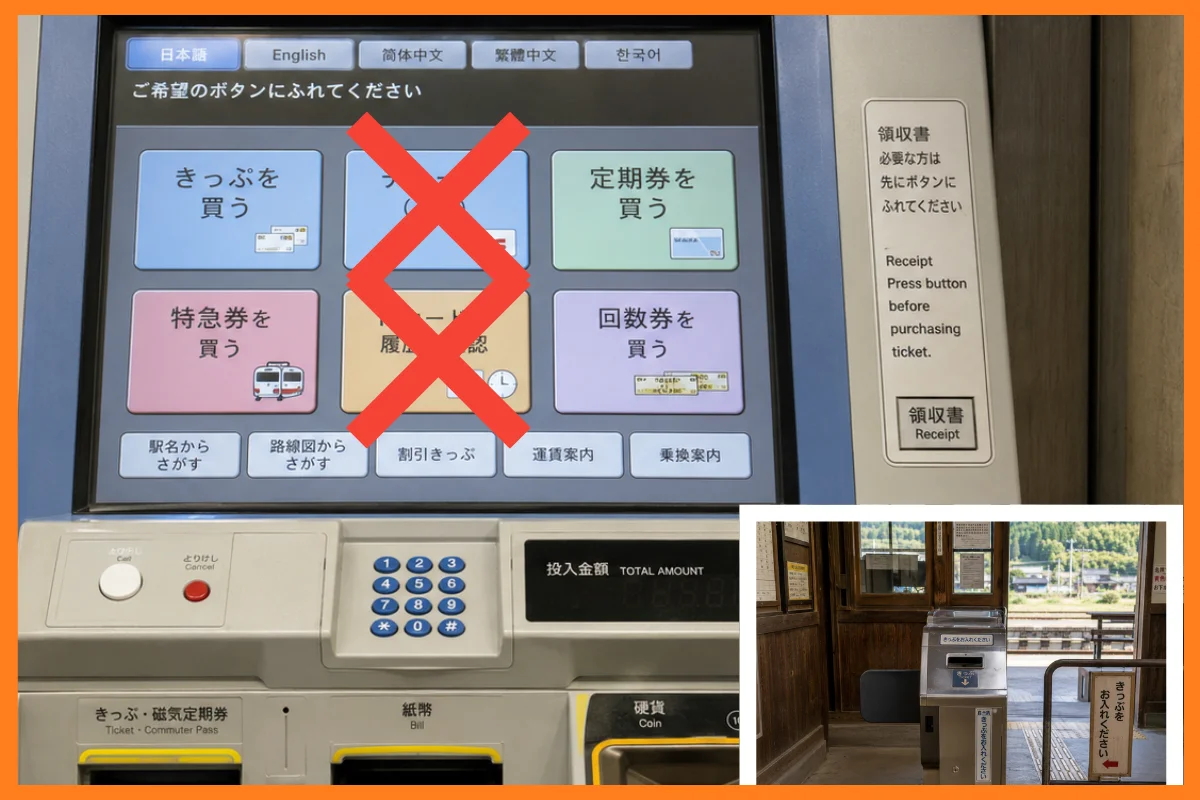
The charge cap for a physical Suica is ¥20,000 including balance.
Fully charging cards for a family of 5 is up to ¥100,000 worth — don't top up to the max, just load what you need.
Preparing an IC card changes with your "entry route"
Bottom line: Welcome Suica is only sold at Tokyo-area airports and major stations like Narita and Haneda, so families entering via Kansai Airport or Chubu Centrair need a different plan.
Entering via Narita or Haneda Officially confirmed
Physical Welcome Suica is sold at airports and major stations
- No ¥500 deposit required. But the balance is non-refundable after it expires
- Sold only at Tokyo-area airports and major stations, such as Narita, Haneda (Terminal 3), and JR EAST Travel Service Centers in Tokyo and Shinjuku. One card per person
- A children's Welcome Suica is available for kids under 12. Bring the child's passport to the counter (confirm required documents on-site)
Entering via Kansai Airport or Chubu Centrair
Physical card unavailable. Choose Mobile, or decide not to get one
- iPhone/Apple Watch users can set up "Welcome Suica Mobile" before entering Japan and charge it with an Apple Pay credit card
- If you need a physical card, regular IC cards like ICOCA/manaca are also available for purchase (with a deposit). Either way, they still won't work at Takayama Station or on Nohi Bus
- Honestly, the more your family enters via Kansai or Chubu, the easier it is to decide "don't chase IC cards in Takayama & Shirakawa-go"
Keep in mind that if your itinerary is "only" Takayama & Shirakawa-go, an IC card isn't essential. Since it won't work for transport anyway, deciding "not this time," based on how many days you'll spend in cities like Tokyo and Osaka, is a perfectly good choice. For a detailed comparison of the transport options themselves, see Limited Express Hida + Nohi Bus: Family Transport Guide to Takayama & Shirakawa-go (Transport article). *As of research. Rules and sales conditions may change, so check each company's official info.
Preparing cashWithdraw cash at ATMs in Takayama city "before you go to Shirakawa-go"
Bottom line: Takayama has several ATMs that accept overseas cards, while ways to get cash in Shirakawa-go are limited.
| ATM | Cards accepted | Location & notes |
|---|---|---|
| Seven Bank ATM | Overseas-issued Visa/Mastercard/JCB/UnionPay/Amex, etc. (12 languages) | Several 7-Eleven stores in Takayama city, plus a shared branch at a currency-exchange shop about a 2-min walk from Takayama Station |
| Japan Post Bank ATM (Takayama Post Office) | VISA/Mastercard/JCB/UnionPay, etc. | About a 5-min walk from Takayama Station. Withdrawals up to ¥50,000 per transaction, with a usage fee of about ¥220/transaction (your card company's fee is separate) |
| Post office ATM in Shirakawa Village | Same as above (International ATM Service) | Not operating after early evening or on Sunday afternoons. "Just withdraw in Shirakawa-go" won't work |
There is a post office ATM in Shirakawa Village too, but its hours are limited, so it's safer to take care of it in Takayama first. Rather than exchanging a lump sum at the airport, withdrawing the amount you need in stages at ATMs leaves less unused cash and is easier for a large family to manage (which rate is better depends on your card company's terms). *Approximate, as of research. Fees and operating hours may change.
When you need cashWhen you need cash: the morning market, temples & shrines, festival stalls
Bottom line: the more it's a "trip highlight" in Takayama & Shirakawa-go, the more the small shops are cash-only.
- The Miyagawa Morning Market (held daily; 7:00–12:00 from April to November) has many cash-only stalls. Bring plenty of coins and ¥1,000 bills for the kids' snacking on the go.
- At shrines and temples, admission fees and offerings are basically cash.
- Prepare on the assumption that the autumn Takayama Festival and the stalls and small shops within Shirakawa-go villages are often cash-only, too. For how to tour the festival and autumn leaves, see The Autumn Takayama Festival & Shirakawa-go Fall Colors: A Guide for Families with Kids (Activity article).
- A rule of thumb: dividing roles as "a day's snacking, admission, and bus fares in cash; convenience stores and restaurants by card/IC" makes it easier to estimate the cash you need for the whole family.
The "× riding / ○ shopping" chart
When in doubt, decide by "am I riding, or am I buying?" Takayama Station's gates and the Nohi Bus cabin are ×; shopping at convenience stores is ○.
IC card boarding at Takayama Station's gates and on Nohi Bus is "✕" (cash / paper ticket required; except limited Hida conditions). As e-money for shopping at convenience stores and the like it's "○" (nationwide interoperability, so it works in Takayama too). Rules may change, so check each company's official info.
Honest things to note
Even with handy workarounds, there are 4 things we want to note honestly so you're not caught off guard on the ground.
Cash & IC card FAQ for Takayama & Shirakawa-go
Is a Suica I bought in Tokyo wasted in Takayama?
It's not wasted. It won't work for riding, but it works for shopping at convenience stores and the like. We recommend using up the balance before you fly home, at airports or city convenience stores (since Welcome Suica is non-refundable and expires in 28 days).
How should I arrange IC cards for the kids?
If you enter via Narita or Haneda, get a children's Welcome Suica for kids under 12 at airport or Tokyo-area major-station counters. Bring the child's passport and confirm the required documents at the counter. If you enter via Kansai or Chubu, children's cards are hard to get in advance, so for the Takayama & Shirakawa-go section it's simplest to decide "kids use cash and paper tickets." Either way, you can't make a Welcome Suica after arriving in Takayama.
What if I've gone to Shirakawa-go without cash?
If the village post office ATM is within operating hours, you can withdraw with an overseas card, but it's unavailable after early evening or on Sunday afternoons. It tends to overlap with day-trip bus times, so it's surest to withdraw in Takayama before you board.
(Safety) I'm nervous about carrying the family's cash. Any loss-prevention tips?
Don't concentrate cash on one person; split it between two parents, keep only one day's worth in a wallet and the rest in the lodging's safety box. If you also split up IC cards and other cards, losing one won't stop your trip. In case of loss, go to the nearest police box (KOBAN). Lost items are often returned in Japan, but assume you won't get an IC card's balance back if lost, so the best defense is not loading a large amount onto a single card.
Read next
📍 This article is part of the Takayama & Shirakawa-go trip plan ・ See all Tips articles