A Japanese summer is
won by preparation, not willpower.
You've finally crossed the ocean for your Japan trip. But the real enemy of summer (June–September) isn't the temperature itself — it's the inescapable humidity. The sauna-like, muggy heat lasts all day, and the glare off the concrete hits the shortest kids the hardest. The more people in your group, the more one person's off-day can wreck the whole day. Bottom line: a large-family summer trip is decided by "preparation," not "willpower." Convenience-store lifesavers, a layer for indoor AC, and not overpacking your plans — lock in these three things first.
A summer trip to Japan means a triple threat: scorching heat, humidity, and sudden downpours. This article covers, from a with-kids perspective, how a large family can get through summer with "preparation" instead of "willpower" — making the most of convenience stores, packing a layer against the AC, and building plans that aren't overpacked.
*This article is an informational column for large families. It is not an ad pushing a specific booking; it's built mainly around internal links that guide you to related articles on stays, getting around, and experiences. Because the site as a whole uses affiliate links, we note it each time we include one (Affiliate Disclosure). Guidance on heatstroke and the like is compiled neutrally based on official info from the Ministry of the Environment, the Japan Meteorological Agency, and others.
The 3 allies for surviving summerConvenience stores, a layer, and family restaurants save a large family's summer
Bottom line: Japan's summer is hot and humid, and it wears kids out the most. So instead of "toughing it out," the right move for a large family is to make full use of the allies found all over town.
① Convenience stores and vending machines are the family's lifeline
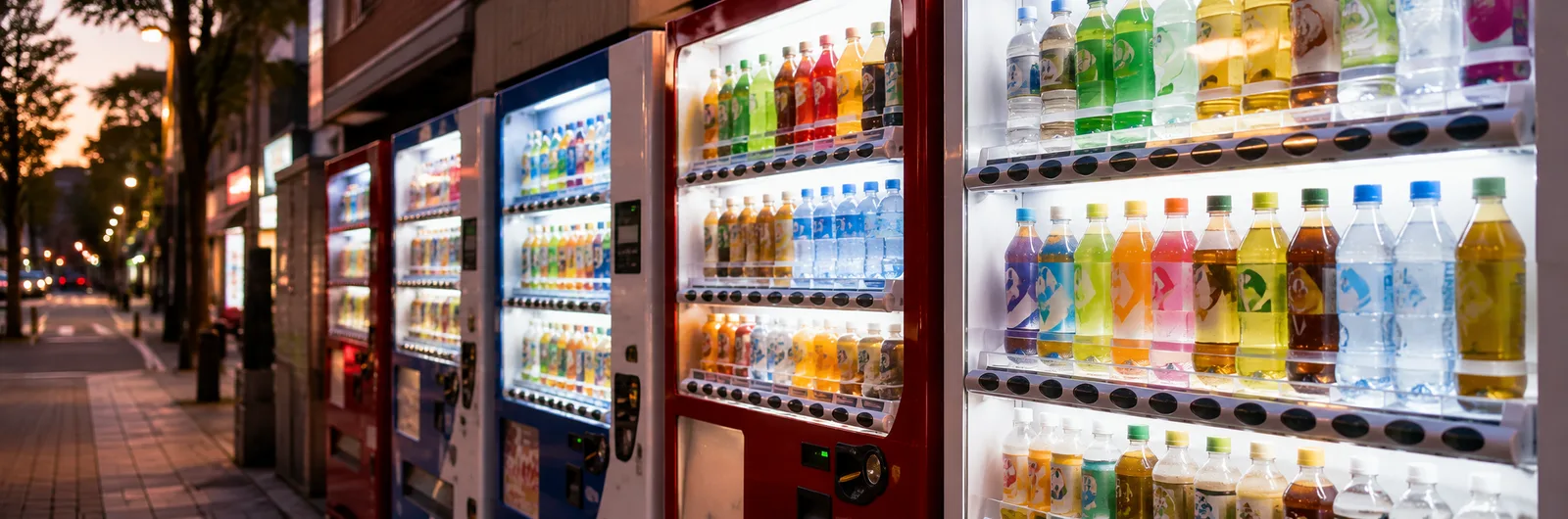
Bottom line: water and a way to cool down are available every few dozen meters. Vending machines are everywhere. Get everyone a cold drink before they feel thirsty. Cooling sheets (stuck on the neck or forehead) also help with cranky kids. For summer-afternoon sudden downpours, a convenience-store clear vinyl umbrella (about ¥600) can be bought anywhere and is the best there is. You can grab one for each person in a flash.
② One layer for the fierce indoor AC
Bottom line: trains and shopping complexes can cool down to about 20℃. From 35℃ outside straight into a suddenly chilly interior — that swing in temperature easily makes kids unwell. Always carry one thin cardigan or hoodie.
③ Make a family restaurant your rest oasis
Bottom line: shaded benches where you can sit and cool off are surprisingly scarce in town. Family restaurants like Gusto and Saizeriya have roomy seating even for a large family. For a few hundred yen at the drink bar, the whole family can cool down properly in the AC.
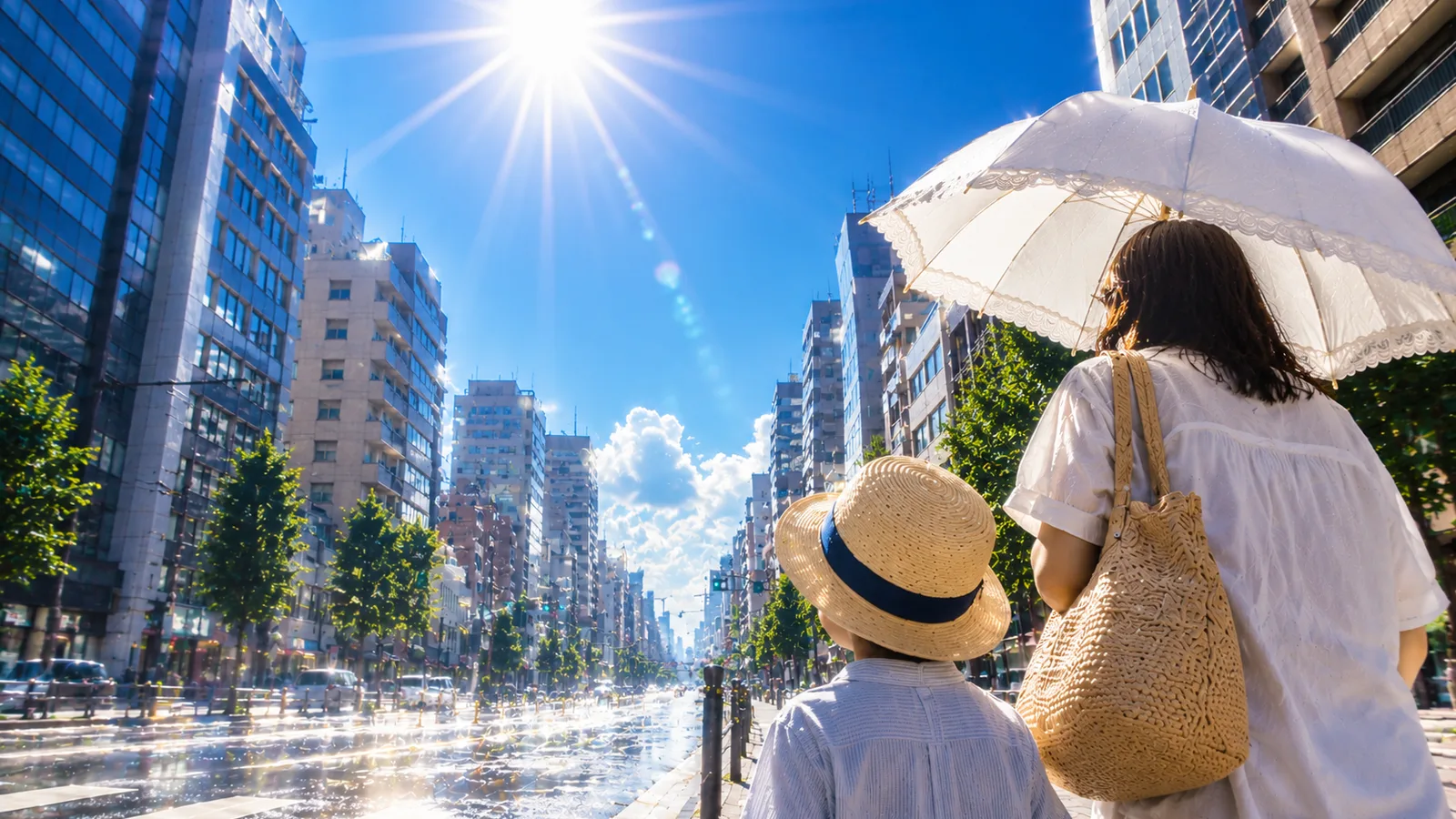
The single most effective tip for a large family in summer is — don't be greedy with your plans.
The places you miss become "a reason to come back." Rather than the whole day collapsing over one person's off-day, aim for a relaxed one.
*Overpacking raises the risk of heatstroke. Drink water before you're thirsty and take frequent breaks.
A large family's summer timetable — head indoors during the hot hours
Bottom line: simply not being outdoors around the hottest midday hours greatly reduces how worn out you get. Outdoors in the morning and evening, indoors (aquariums, venues, family restaurants) at the peak heat. That's a large family's day that won't fall apart.
Shift outdoor time to morning and evening
Move during cool hours, cool off during hot hours
- In the morning, hit the main spots before the temperature climbs
- Around midday, go indoors (aquariums, venues, family restaurants)
- In the evening, once it cools down, head back outdoors
- Plan ahead for water, restrooms, and breaks between moves
Water, breaks, and don't overdo it
Drink before you're thirsty. Rest the moment a sign appears
- A little, often, before you feel thirsty
- A red face, lethargy, or sweating that stops are danger signs
- If something's off, rest somewhere cool → seek medical care
- With infants and the elderly, be especially careful not to overdo it
| Time of day | What a large family does | Heat strategy |
|---|---|---|
| Morning (while cool) | Outdoor main spots and travel | Hats, shade, water before you set out |
| Around midday (peak) | Head indoors (aquariums, venues, family restaurants) | Rest in the AC, one layer, a solid break over lunch |
| Afternoon (watch for sudden rain) | Mostly indoors, shopping, etc. | Sudden downpour → clear umbrella (about ¥600) |
| Evening–night | Back outdoors once it cools down | Keep drinking water often, don't overdo it |
* This is an example plan for a day that's easy to manage with a large family; it changes with venue opening hours and the weather. Check the day's forecast for temperature and weather, and stay within comfortable limits. Please check the latest official info from the Ministry of the Environment, the Japan Meteorological Agency, and others on early heatstroke symptoms and first aid.
How it worksWhy "drinking before you're thirsty" works
Bottom line: by the time you feel thirsty, your body is already short on water. So "once you're thirsty" tends to be too late. Drinking a little often, before you're thirsty, is the key to protecting your whole large family. The diagram below illustrates this idea.
Thirst is a sign that you're "already short on water." Drinking a little often before you're thirsty is the basis of dehydration prevention. Make use of salt and oral rehydration solution, too. If something's off — a red face, lethargy, sweating that stops — rest somewhere cool right away and seek medical care if needed. The diagram illustrates the concept (for details, check official info from the Ministry of the Environment, the Japan Meteorological Agency, and others).
Once you've got the heat handled, build your summer Osaka plan
A cool place to rest, travel with few transfers, experiences you can enjoy indoors. Head to articles connected along a large family's route.
This article is an informational column. It's not an ad for bookings; it guides you to related articles connected along a large family's route.
Honest caveats: so you don't overdo it
Preparing for summer matters, but overconfidence is dangerous. For your safety, here honestly are the things we'd like you to know.
Worries worth clearing up before you leave
In a Japanese summer, what should I watch for most with my kids?
Heatstroke from the humid heat. Frequent water before thirst (with salt too), resting indoors during the hot hours, and not overpacking your plans — these three are the basics. A red face, lethargy, or sweating that stops are danger signs, so rest somewhere cool right away. For severe symptoms, seek medical care.
How do I prepare for sudden heavy rain (guerrilla downpours)?
Summer afternoons often bring intense, localized rain. A clear vinyl umbrella (about ¥600) from a convenience store is available anywhere and handy for grabbing one per person right away. To prepare for sudden weather changes, it's reassuring to have indoor plans ready too.
It's cool inside, so why do I need a layer?
Because AC on trains and in shopping complexes can drop to about 20℃, and the temperature swing from 35℃ outdoors easily makes kids unwell. Always carry one thin cardigan or hoodie.
I can't find anywhere to rest.
Japanese towns have few shaded benches. Make a family restaurant (Gusto, Saizeriya, etc.) your rest oasis. With roomy seating even for a large family, everyone can cool down in the AC for a few hundred yen at the drink bar.
How much can a large family see in a day?
Aim for half your usual. The more people you have, the more time goes to restrooms, water, and breaks, and overpacking also raises the heatstroke risk. Shift indoors during the hot hours, and go outdoors in the morning and evening. The places you miss become a reason for your next trip.
Build your summer Osaka plan

📍 This article is part of our large-family Tips & Life article list